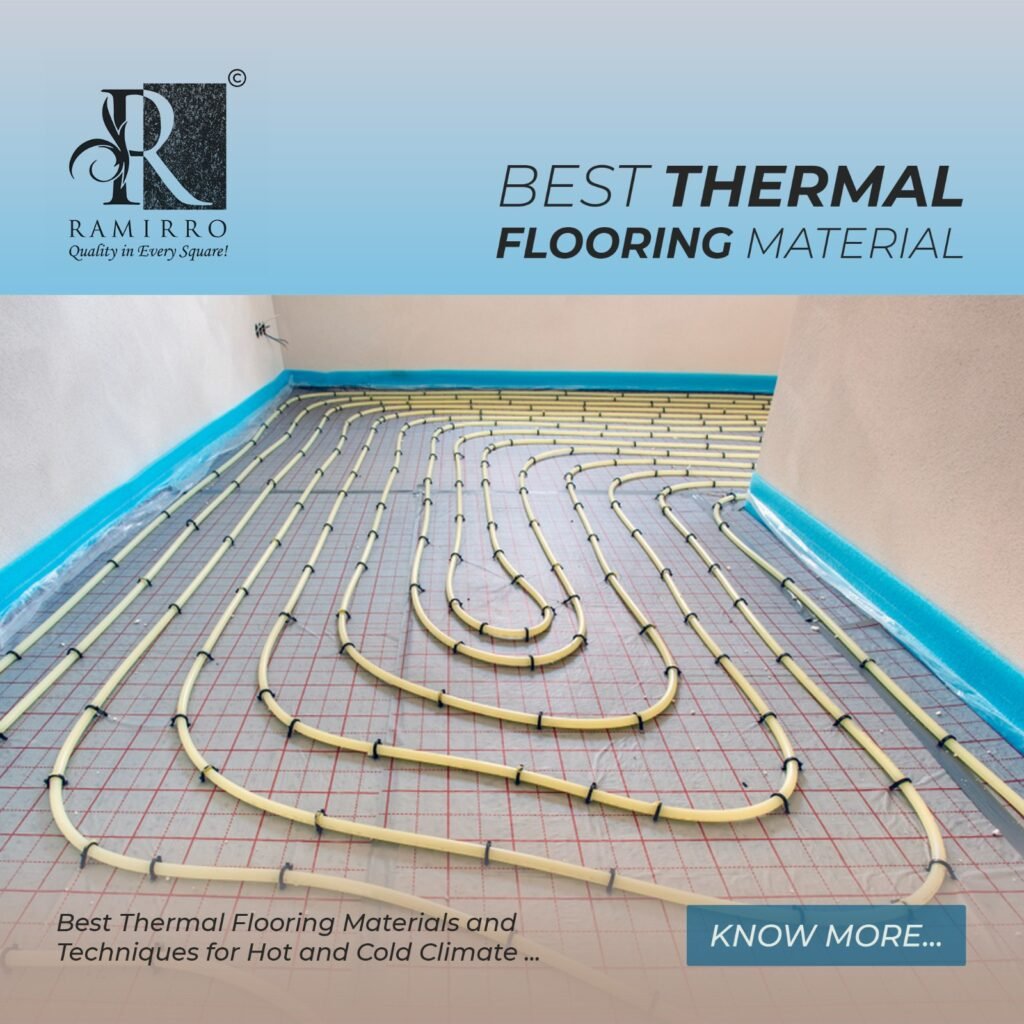
When it comes to selecting the best thermal flooring materials and techniques for hot and cold weather, understanding how different climates affect flooring performance is crucial. Proper thermal flooring solutions not only improve comfort but also enhance energy efficiency and longevity. Ramirro Ceramica, a leader in innovative and high quality tile manufacturing, specializes in climate adapted flooring materials designed to withstand extreme temperatures. Whether dealing with freezing winters or scorching summers, using the right materials and installation methods ensures your floors remain durable, efficient, and stylish. In this article, we explore the top thermal flooring materials and proven installation techniques that deliver optimal results in both hot and cold weather conditions.
Temperature fluctuations in hot and cold climates introduce significant challenges for flooring materials. Expansion and contraction caused by heat and cold can lead to cracks, warping, and adhesive failures if not properly addressed. Thermal flooring materials combined with advanced installation techniques offer effective solutions to maintain comfort, improve energy efficiency, and ensure long lasting durability. Ramirro Ceramica stands out as a provider of premium, climate resilient tiles designed specifically to perform in diverse temperature conditions. Their range of innovative products and expert installation practices supports architects, engineers, and homeowners in creating floors that withstand extreme temperatures while enhancing indoor comfort and sustainability.
Exposure to intense sunlight and heat causes tiles to expand, sometimes unevenly. This thermal expansion puts stress on the tile joints and adhesives, which can result in cracks, warping, or buckling if proper expansion gaps or flexible adhesives aren’t used.