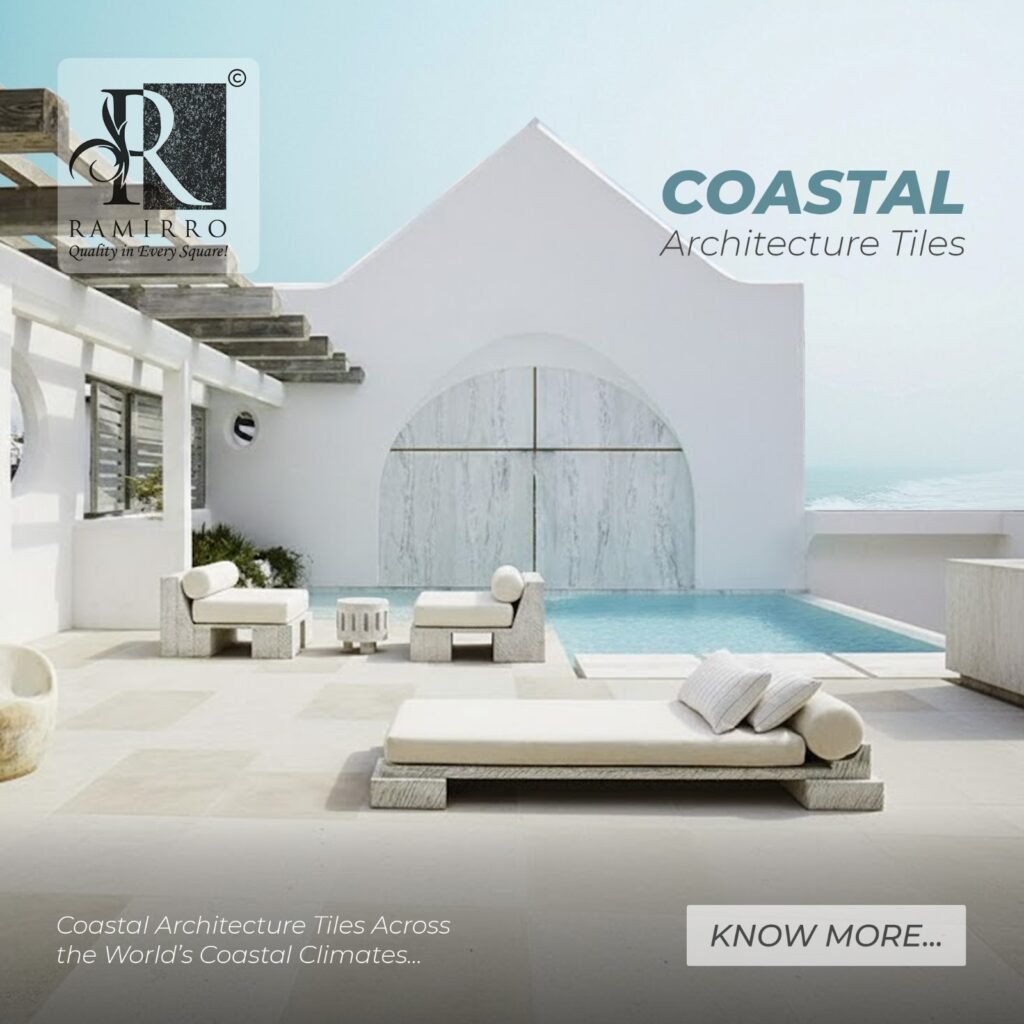
Coastal homes demand more from their surfaces than just good looks, which is why coastal architects increasingly rely on tiles that can handle humidity, salt laden air, and sandy feet while still delivering calm, timeless style. Ramirro Ceramica is an innovative tile manufacturer known for crafting high performance porcelain and ceramic tiles that suit these demanding seaside conditions, helping homeowners create bright, breezy interiors that flow effortlessly to outdoor decks and terraces. In this guide, you will discover practical home design ideas and style tips inspired by coastal architects around the world, so you can choose surfaces that feel like the sea yet stand strong against the coastal climate.
Coastal architecture is not just a look; it is a climate response built around salt air, humidity, UV exposure, wind load, and constant moisture cycles that quietly attack every surface of a home over time. When these forces are ignored and designers simply copy “beach house aesthetics” from images, materials such as paints, metals, low grade stone, or unsuitable tiles can fade, crack, corrode, or lose adhesion far earlier than in inland conditions, leading to costly failures and renovations. Coastal architects therefore work performance first and beauty second, selecting robust envelopes, detailing for drainage and ventilation, and relying on tiles as a silent protective layer that resists water absorption, salt crystallization, and abrasion, so the home can survive decades of coastal weather while still delivering the relaxed, light filled style people love.
Modern coastal architecture proves that one tile specification can never work for every shoreline, because each region’s climate, culture, and construction traditions pull the design in different directions. Australia’s sun drenched surf coasts need UV stable, slip resistant porcelain that can handle intense heat and sandy indoor outdoor living, while Japan’s coastal homes often combine minimalism with seismic aware construction and strong humidity control, favoring calm, tactile surfaces that bridge interior and exterior with precision. Mediterranean Europe’s coastal villages lean on stone look and terracotta inspired tiles that echo centuries old masonry and courtyard culture, whereas African coasts balance high heat, salt exposure, and rapidly evolving building methods, prioritising cool, light reflective, durable tiles that cope with both tradition and modern density.