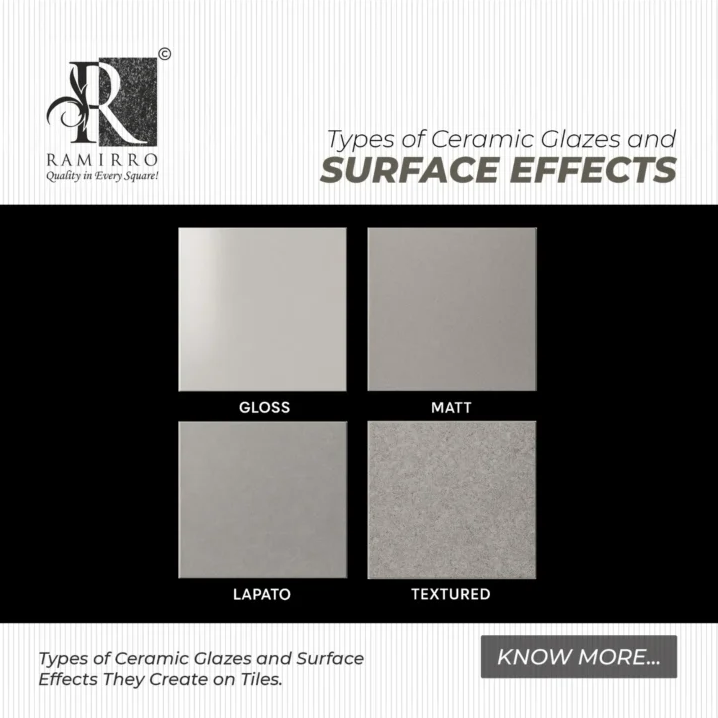
Ceramic tiles may begin as shaped clay, but it is the glaze that ultimately defines how they look, feel, and perform in real spaces. From glossy reflections to soft matte textures and stone like surface effects, different types of ceramic glazes play a crucial role in creating the final finish seen in modern tiles and ceramics. During the firing process, glaze transforms into a protective glass like layer that enhances durability, colour depth, and surface performance. Understanding these glazing effects helps architects, designers, and homeowners make more informed material choices. At Ramirro Ceramica, an India based ceramic tile manufacturer known for combining design innovation with advanced tile engineering, glazing technology is carefully developed to deliver finishes that balance aesthetics, functionality, and long term reliability in contemporary architectural spaces.
Why Glaze Is the Real Designer of a Tile
A ceramic tile may begin as a simple piece of shaped clay, but it is the glaze that truly defines its personality. The same tile body can appear glossy and reflective, soft and matte, textured like natural stone, or rich with layered depth, all depending on the type of glaze applied. A ceramic glaze is a carefully formulated mineral coating that melts during kiln firing and forms a thin, glass like layer on the surface of the tile.
This transformation is not just decorative; it is functional. The glaze controls colour intensity, light reflection, texture, stain resistance, and even durability. In modern architecture, where surface finish influences both design appeal and performance expectations, glaze technology plays a critical role. Understanding different types of ceramic glazes helps buyers see beyond appearance and recognise why tiles look, feel, and perform differently in real world spaces.
Related Post
- Journey of Kilns: Six Ancient Kilns to Industrial Ceramic Firing
- Types of Ceramic Glazes and the Finishing Effects They Bring to Tiles and Ceramics
- Cheap Tiles vs Expensive Tiles: A Clear, Practical Look at Pricing, Quality, and Value in Ceramic & Porcelain Tiles
- Certificate of Origin for Tile Export and Import: Why It Matters in Global Trade
- India–EFTA Trade and Economic Partnership Agreement: What the New Trade Deal Means for the Tiles Industry
- UK-India CETA Trade Deal Explained: A Complete Guide to Trade in Goods and Tile Imports in the United Kingdom
- ASEAN Ceramics and Tile Market in Southeast Asia: Understanding Ceramic Industry Trends and Selecting a Reliable Tile Supplier in Malaysia
- Preferential Trade Agreement Explained: How India MERCOSUR Trade Agreements Shape Market Access
- Best Tiles in South Korea Under Free Trade Agreements: Porcelain Wall and Floor Tile Trends
- Best Tiles in Singapore from a Leading Tile Supplier — How Free Trade Agreements Improve Tile Value
- India Oman Free Trade Agreement: What It Means for Ceramic and Porcelain Tile Export and Import
- Imported Tiles in New Zealand: How the India Free Trade Agreement Creates Price Benefits and Cost Advantages for Tile Importers
- Salone del Mobile 2026 in Milan: Complete Guide to Salone del
- INDEX Exhibition Dubai 2026: Interior Trends & Highlights in UAE
- March 2026 Tiles Exhibition: Guide to Global Tile & Ceramic Fairs
- Tile Shade Accuracy: Munsell Color System for Color Consistency
- Tile Trends 2026: Porcelain Designs for Bathrooms & Kitchens
- Japandi Style Tiles: Peaceful Interiors with Functional Spaces
- Island Flooring Design Inspiration: Best Tile Ideas for Home Floors